
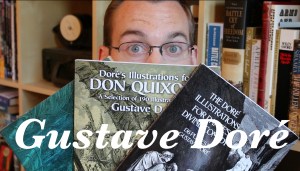
Greetings, folks! Here’s the latest Bookworm History episode for your podcast enjoyment! This one’s all about the life and career of Victorian artist Gustave Doré! Featuring one of the best telegrams ever sent! Enjoy!
Year: 2015
Gustave Doré: His Life and Works
Greetings, folks! We’ve got a new Bookworm History episode up over on the YouTube channel. This one is all about the life and prolific career of 19th Century artist Gustave Doré! Click on the title card below to watch, and don’t forget to subscribe!
And, as always, thanks for stopping by!
“Don Quixote” in 18th Century French Tapestry
First, a little background. While a copy of “Don Quixote” has been sitting on my shelf for the last 15 years or so I never bothered to read it until last Fall when I thought to give it a go. I was going through a bit of a rough patch at the time and reading the alternately comedic and tragic tale of the mad gentleman of La Mancha somehow made things easier (I also had Linda Eder’s version of “Man of La Mancha” stuck in my head a lot of the time, but that’s neither here nor there). Since then I’ve been captivated by all things Quixotic, from the history of the book itself (https://youtu.be/_Tb0iK2HYkc), to different translations, to various illustrated versions (my favorite remains Gustave Doré‘s, although I also enjoy Salvador Dali’s). So when The Frick Collection had an exhibition this past spring centering around a series of tapestries of “Don Quixote” my interest was piqued. The tapestries in question were produced by the Gobelins Textile Manufactory in France from 1717 to 1794, as well as other versions by Flemish manufacturers, but the images that provided the central focus of each tapestry were created by French painter Charles Coypel. I enjoyed the Frick’s exhibition and purchased the catalog of their exhibition, a thin volume with a bright red cover, which I then proceeded to bury unread beneath a massive stack of other books.
Fast forward to last week when I was walking through the state rooms of Buckingham Palace to see the Queen’s Vermeer “The Music Lesson” (I’m trying to see every Vermeer in the world and this one happened to be in Buckingham). On the way out of the Picture Room I passed down a short hallway with four tapestries, two hung on either side. I recognized one as Quixotic instantly (“Sancho Awakes in Despair at not Finding His Beloved Grison”; the image of Sancho sitting atop four stilts is iconic) and excitedly examined the others. They were all of the same series as those I had seen earlier at the Frick! When I returned home I immediately pulled out the little red volume to try to find out more. What followed was an education, however lite, into tapestry history and creation with Coypel and Don Quixote as my guide.

Continue reading ““Don Quixote” in 18th Century French Tapestry”
Episode 4 – “The Iliad” and “The Odyssey” by Homer
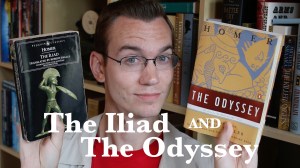
Greetings, folks! Just posted a new episode over on the BH youtube channel. This one’s all about the history and stories behind “The Iliad” and “The Odyssey” by Homer. It’s a story that has a little of everything! Warriors! Archaeologists! Papyrus! You name it!
You can watch the episode on YouTube by clicking on the title card below. You can also listen to it in convenient podcast form by searching for “Bookworm History” in the iTunes store. Don’t forget to subscribe!
Episode 3 – “In Search of Prester John”
Greetings folks! Putting up another episode in glorious podcast form for you. This time we’re off in search of the legendary realm of the mighty Prester John!
Take a listen! Do you like the new podcast format? Let me know in the comments! Along with formatting BH videos into podcast form I may have some podcast-only content coming up, so stay tuned!
New episode! Dover Plains Stone Church!
Greetings, folks! Just posted a new episode up on the Youtube channel. This one’s all about the history and scenery of the Dover Plains Stone Church, a fantastic little spot in eastern Duchess County, NY. Check it out by clicking the title card below!

And, as always, thanks for stopping by!
Episode 2 – “The Three Musketeers” by Alexandre Dumas
On this episode of the Bookworm History podcast, it’s “All for one and one for all!” as we dive into the story and the history behind Alexandre Dumas’ swashbuckling classic “The Three Musketeers”!
Stone Church Postcard Mystery
While putting things together for a new Hometown History episode (spoilers!) I came across this postcard from 1921. The episode will explain more about where the postcard is from but what caught my interest was less about the image on the front and more about the writing on the back.
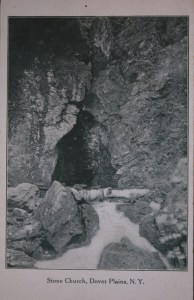

The text reads:
“My Dear Sister:-
Expected a letter from you. I am located here for a few days, but expect to go home tomorrow. It is a very lovely place here. I hope you have made a decision by now. Let us here from you very soon.
Lovingly Sis,
Clara”
What was the decision Miss Gertrude Smith was putting off making? What brought Clara to Dover Plains? Why was handwriting so much more elegant in the 20’s than it is now? (I already know the answer that one, but that’s ok)
Incidentally, if anyone out there knows who these folks are please let me know!
Episode 1 – “Doctor Faustus” by Christopher Marlowe
Welcome to the inaugural Bookworm History podcast! Today we’re delving into the real world behind Christopher Marlowe’s immortal “Doctor Faustus”, the brilliant-but-bored German magician who sold his soul to the devil. Before he was ever immortalized by Marlowe, Faust was a real person (although a pretty cut-rate magician who probably didn’t sell his soul to the devil). Magic! Demons! A maddeningly non-linear story of publication! All that and more!
The Devilish History of “The Tragical History of Doctor Faustus” by Christopher Marlowe!
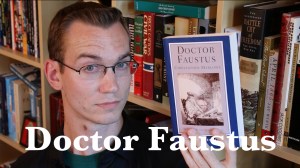
Greetings, folks! I just uploaded a brand new episode of Bookworm History over on the YouTube channel all about the story behind Christopher Marlowe’s infamous “Doctor Faustus”. I learned a ton while putting this together and I hope you will, too! Click the title card below to check it out, and, as always, thanks for stopping by!
P.S.- This website and all the stories contained therein can now be accessed simply by going to bookwormhistory.com! Very exciting!
 Bookworm History