The History of “The Phantom of the Opera” by Gaston Leroux

Greetings, fellow bookworms! I hope you’ve all recovered from whatever New Year’s festivities struck your fancy. I just put the finishing touches on a brand new episode of Bookworm History over on the Youtube channel. In this episode I explore some of the fictions and some of the facts that inspired French author Gaston Leroux to pen his most famous novel “The Phantom of the Opera”!

Click the title card to check it out and, as always, thanks for stopping by!

Phantom

“The Night the Bed Fell” by James Thurber

Happy New Year, folks!  I’ve had a fantastic time this past year putting together all the videos and articles here and as a way to celebrate I thought I’d relax a little and share with you one of my favorite short stories.  When I was little my mother would read this to me and to this day it never fails to make me smile.  I hope you enjoy it!  Just click on the title card below to watch.

If you have any ideas for topics you’d like to discuss or other stories to read in the new year leave them in the comments!

And, as always, thanks for stopping by!  I hope you all have a safe, happy, and healthy 2016!

%22The Night the Bed Fell%22

Columbus, Kentucky. Capital of the United States?

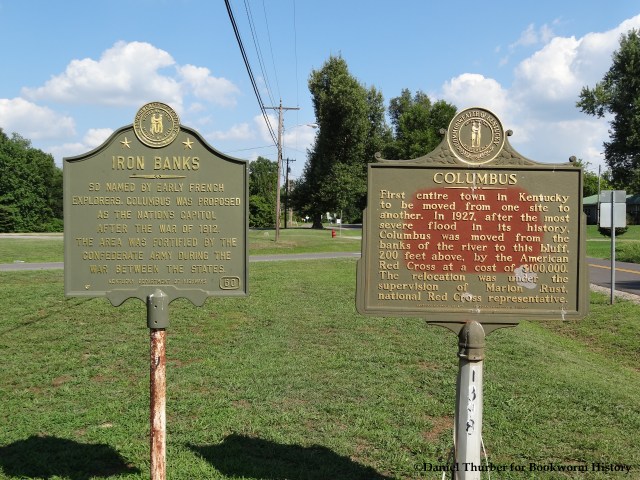
As you drive into the Columbus-Belmont State Park, outside of Columbus, KY, a pair of historic markers greet you. The first says that Columbus was the first town in Kentucky to be picked up and moved. The re-location happened in 1927, when the town was moved further uphill with the floodwaters of the Mississippi nipping at its heels. The second sign, somewhat older looking that the first, proclaims that following the War of 1812 Columbus was one of the locations proposed as the nation’s capitol. It was this claim that piqued my interest.

columbus-ky-capital-of-united-states-historical-markers-iron-banks-columbus-ky-bookworm-history-daniel-thurber
The markers at the entrance to Columbus-Belmont State Park

Continue reading “Columbus, Kentucky. Capital of the United States?”

The Confederate Mississippi River Chain

A while back I did a write-up on the Sterling Lake Mines and the Great West Point Chain that the American troops installed across the Hudson during the Revolution. While that chain gets more of the glory and glamour than most others, it was certainly not the only chain stretched across an American river. In a riverside park just north of the small town of Columbus, KY is Columbus-Belmont State Park, home to the remnants of the Confederate Mississippi River Chain.

confederate-mississippi-chain-chain-anchor-columbus-belmont-state-park-columbus-ky-bookworm-history-daniel-thurber

Continue reading “The Confederate Mississippi River Chain”

Meet Ezra Meeker, the 76-year old who saved the Oregon Trail from disappearing

Meeker PortraitThe date was November 29, 1907. Ezra Meeker, a slight, elderly fellow whose unkempt beard was full of dust from the road, was waiting in the cabinet room of the White House for President Theodore Roosevelt. Just one month shy of his 77th birthday, Meeker had arrived in Washington DC by ox-drawn covered wagon all the way from Washington State. A man on a mission, he had already come a very long way. And he had even further yet to go.

Continue reading “Meet Ezra Meeker, the 76-year old who saved the Oregon Trail from disappearing”

How Did They Levy Tolls on the Erie Canal?

As you drive across America’s Interstate Highway System you may notice certain special off-ramps that only large cargo trailers take. These weigh-stations are used by the states to check permits, as well as determine whether a truck is within weight limits based on how heavy it is. The truck simply drives onto a large platform with a scale under it, sometimes stopping, sometimes not.  The scale measures the truck’s weight and if all is well the truck goes on its way.  It’s all very quick and easy. But it has roots in an earlier transportation system: America’s canals.
Continue reading “How Did They Levy Tolls on the Erie Canal?”

How Do You Support a 5-ton Elephant?

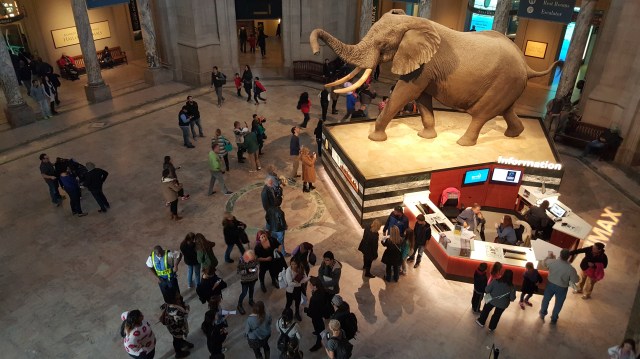
Meet Henry.  He’s a male African bush elephant who first graced the rotunda of the National Museum of Natural History in 1959.  Constructed of metal lathe, wood, plaster, and a lot of clay Henry weighs in at over 10,000 pounds.

20151114_124710
Henry the elephant greets visitors to the National Museum of Natural History in Washington, D.C.

While it might not occur to visitors to the Museum, supporting that kind of weight (to say nothing of Henry’s setting, the nearby information booth, or all of the people walking through) isn’t easy.  So how does the Museum do it?  Steel beams in the floor would seem logical and would get the job done, but the real answer is something much less mundane.  Henry is actually standing on tiles. Continue reading “How Do You Support a 5-ton Elephant?”

Two Friends, a River Hotel, and the Legend of “Unconditional Surrender” Grant – The Battle of Fort Donelson

Nestled on a quiet stretch of the Cumberland River, in a small, quiet town just south of the Tennessee/Kentucky border sits an unassuming two-story building, with a long porch on the south side and a balcony overtop.  While it may not look flashy or magnificent, it was here at the Dover Hotel that the Battle of Fort Donelson would end and the legend of Ulysses S. “Unconditional Surrender” Grant would begin.  While small in scope when compared to Gettysburg or Shiloh, Fort Donelson was a significant battle that set the tone of the War in the Western Theater for the next two years.  Today, Fort Donelson National Battlefield stands as not only an exquisite example of original Civil War earthworks, but also a tribute to those who struggled in an important and often overlooked event in the history of the United States.

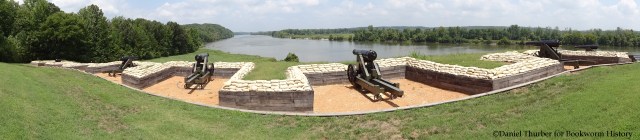
fort-donelson-river-battery-panoramic-cumberland-river-dover-tennessee-bookworm-history-daniel-thurber
Fort Donelson’s lower battery, overlooking the Cumberland River

Continue reading “Two Friends, a River Hotel, and the Legend of “Unconditional Surrender” Grant – The Battle of Fort Donelson”

Central Park and the Long-Lost Ramble Cave

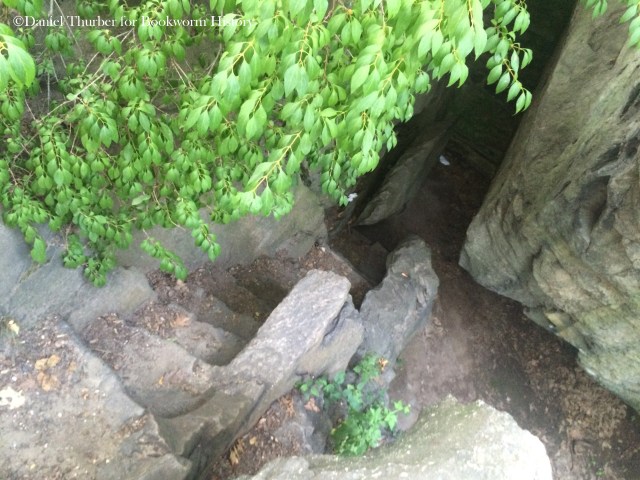
In New York City’s Central Park, just below the 79th St. Traverse, lies a heavily wooded area, interwoven with narrow, winding trails, and dotted with large granite boulders.  While The Ramble, as it’s known, may appear to be the most natural place in the city it only looks that way thanks to the efforts of Central Park’s planners Frederick Law Olmsted and Calvert Vaux, as well as the original builders of the Park who put in countless hours constructing a landscape that would seem rustic and remote.  But for all their hard work, Central Park has changed.  Like everything else in New York City the Park is constantly evolving, but if you know just where to look you can still find traces of its original features.  One of the more interesting cases is that of the long-lost Ramble Cave.

ramble-cave-stairs-central-park-new-york-city-bookworm-history-daniel-thurber Continue reading “Central Park and the Long-Lost Ramble Cave”